History and Archaeology of the Highlands and Islands MLitt
 Course code: V2V4
 Study mode: You study most days of the week and complete all course units /modules in the standard time., You take fewer course units/modules per week compared to full time.
 Course type: MLitt
 International: Available to study online
 Study at: North, West and Hebrides
 Start in: January; September
 Learning mode: You access classes and/or materials digitally.
 Duration: Full time: 1 year; Part time: 2-6 years
 How: You attend classes at scheduled times, shown on your timetable., You complete course tasks independently. These may be set by your lecturer or chosen by you.
What is special about this course?
This programme brings together the disciplines of history and archaeology through the study of a specific region, the Highlands and Islands of Scotland.
Whether you live locally, or globally, if you have an interest in developing transferable skills in the study of regional pasts, specifically of the north and west of Scotland, the MLitt History and Archaeology of the Highlands and Islands has been designed for you.
Special features
- Combine the two subjects of history and archaeology in a unique way, towards understanding the past of the Highlands and Islands
- Full time or part time study is available to suit your circumstances
- You can study online through the university’s virtual learning environment (VLE), which means you can fit your studies around your personal and professional commitments
- Successful students will be able to proceed from undergraduate study, through the MLitt, towards supervised postgraduate PhD level research
- You will have support from expert staff at the Centre for History and the Archaeology Institute, throughout your studies
- You can study individual modules for personal or professional development, or work towards the PgCert, PgDip, or full Masters degree
Entry requirements
- 2:1 Honours degree or above (or international equivalent) in history or archaeology
- If you have an honours degree in a cognate, or strongly-related subject your application will be considered on an individual basis
*Funding support notice*
Postgraduate Loans (SAAS) (Scottish domiciled students)
Loans for tuition fees are available from SAAS for eligible Scotland domiciled students, and loans for living costs for eligible Scottish students.
Access routes
- Students can progress to this programme from our Humanities degrees
Core modules are:
- Archaeology of the Highlands and Islands (Semester 1)
- Primary sources in history (Semester 2)
You must complete BOTH modules to enable you to exit with the PgCert.
You will also choose one history or archaeology option module, which may include any of the below.
History - any available option module from the MLitt History of the Highlands and Islands, which may include:
- Contemplating the Clearances
- Introduction to palaeography and languages in North Atlantic history
- Maritime lives: the Scottish Northern Isles during the Early Modern period
- The lordship of the Isles
- Voices from the past: understanding and using oral history
Archaeology
- Digital analysis in archaeology
- Early medieval archaeology
- Exquisite islands
- Iron Age in the Atlantic world
- Neolithic studies
- Research and dissertation skills
- Viking and Norse in the North Atlantic
- Excavation (Note: you will be responsible for covering the costs of any travel and subsistence involved)
You will choose three further modules from those listed in the PgCert, ensuring an even split across the two subjects.
Please note: if you wish to undertake a dissertation in archaeology, you must take the Semester 2 module ‘Research and dissertation skills’ as one of your archaeology options.
To achieve the award of MLitt you must complete a 60-credit research dissertation in either history or archaeology.
How will I study my course?
- Full-time
- Part-time (structured)
- Part-time (unstructured)
- You will study through supported online learning using the university's virtual learning environment (VLE)
- In addition to your online studies, archaeology modules will have a weekly, two-hour video-conference component
How long will my course last?
- Full-time: 1 year @ 35 hours per week
- Part-time (structured): 2 years @ 17.5 hours per week
- Part-time (unstructured): up to 6 years
Number of hours per week indicates the total number of hours you should dedicate to the course, which includes time spent in lectures and online class discussion and your own time spent on individual study and research.
- UHI Centre for History
You can study this fully online programme from anywhere in the world. You will be enrolled through the university's Centre for History and will have support from the centre's expert staff and researchers as well as those from the university's Archaeology Institute.
Start date
- September
- January (part-time study only)
Fees
For students normally domiciled in Scotland, with a term-time address in Scotland, the following fees apply:
This includes
- EU nationals with settled or pre-settled status in the UK,
- EEA/Swiss nationals with settled status in the UK
- EEA/Swiss nationals with pre-settled status who are self-employed or migrant workers in the UK.
| 2025-26 | 2026-27 | |
|---|---|---|
| Per module (20 credits) | £610 | £647 |
| Postgraduate certificate (3 modules, 60 credits) | £1,830 | £1,941 |
| Postgraduate diploma (6 modules, 120 credits) | £3,660 | £3,882 |
| Masters degree (6 modules + dissertation) | £5,490 | £5,820 |
For students normally domiciled in the rest of the UK (England, Wales and N. Ireland) or assessed as rest of the UK for fee status, the following fees apply:
| 2025-26 | 2026-27 | |
|---|---|---|
| Per module (20 credits) | £840 | £890 |
| Postgraduate certificate (3 modules, 60 credits) | £2,520 | £2,670 |
| Postgraduate diploma (6 modules, 120 credits) | £5,040 | £5,340 |
| Masters degree (6 modules + dissertation, 180 credits) | £7,560 | £8,010 |
Following the UK’s departure from the European Union, the Scottish Government confirmed that EU/EEA and Swiss nationals, who do not have settled or pre-settled status, will be considered as international for fee purposes. These students will get an automatic fee scholarship.
This includes EEA/Swiss nationals with pre-settled status who are not self-employed or migrant workers in the UK.
| 2025-26 | With scholarship | 2026-27 | With scholarship | |
|---|---|---|---|---|
| Per module (20 credits) | £1,200 | £tbc | £1,273 | £tbc |
| Postgraduate certificate (3 modules, 60 credits) | £3,600 | £tbc | £3,819 | £tbc |
| Postgraduate diploma (6 modules, 120 credits, 180 credits) | £7,200 | £tbc | £7,638 | £tbc |
| Masters degree (6 modules + dissertation, 180 credits) | £10,800 | £tbc | £11,450 | £tbc |
For students who do not normally reside in the UK or European Union, studying online from their home country, or assessed as international for fee status, the following fees apply:
| 2025-26 | 2026-27 | |
|---|---|---|
| Per module (20 credits) | £1,200 | £1,273 |
| Postgraduate certificate (3 modules, 60 credits) | £3,600 | £3,819 |
| Postgraduate diploma (6 modules, 120 credits, 180 credits) | £7,200 | £7,638 |
| Masters degree (6 modules + dissertation, 180 credits) | £10,800 | £11,450 |
This course is not available to international students requiring Student Route visa sponsorship to study in the UK.
A no fee increase guarantee is available for self-funding full-time and structured part-time rest of the UK, EU and international postgraduate students for continuous study for the same award, up to the permitted standard time limit for the relevant award.
Funding
Eligible Scotland-domiciled students studying full-time can access loans up to £11,500 from the Student Awards Agency for Scotland (SAAS). This comprises a tuition fee loan up to £7,000 and a non-income assessed living cost loan of £4,500.
Eligible Scotland-domiciled students studying part-time can apply for a tuition fee loan from SAAS. You must be intending to complete the course in no longer than twice the length of time it would take for a full-time student. For example, if your course is available to full-time students as a one-year programme, you will be funded for a maximum of two years' part-time study. If your course does not have a full-time option, you must complete within three years. You can apply for a tuition fee loan up to £7,000, which will be paid pro-rata for each academic year of study.
Full details can be found on the SAAS website. Applications for loans open in April.
Students from the rest of the UK who meet the eligibility requirements may be able to apply for a loan from the Student Loan Company.
Additional costs
If students wish to undertake the excavation module, they will be responsible for covering the costs of any travel and subsistence involved.
What can I do on completion of my course?
Once you have successfully completed your MLitt History and Archaeology of the Highlands and Islands, there are a variety of careers you might like to consider. Here is a taster of the kind of opportunities available to you:
- Teaching
- Research
- Media, journalism and politics
- Community or adult education
- Museums and libraries
- Heritage and tourism
- Contract archaeology and consultancy
Can I progress into further study?
You may wish to progress to further study such as PhD or MRes at the University of the Highlands and Islands or another institution.
Course is online and open to applicants from anywhere in the world
Please see guidance for international applicants regarding entry requirements
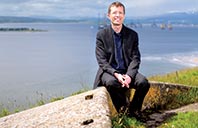
The Centre for History leads on five taught postgraduate degrees. Our students come from a diversity of backgrounds, in terms of age, location and motivation. Our programmes train students in the research methods used by historians and seek to open up a range of new perspectives on local, regional, national, and global themes, from the medieval to the modern.
I bring my own research on Scottish migration to Europe and on coastal history to my postgraduate teaching, while I’ve found that the students, in turn, influence me and give me all sorts of unexpected and welcome new perspectives on my research.
Professor David Worthington, head of the Centre for History, University of the Highlands and Islands.
Apply for History and Archaeology of the Highlands and Islands MLitt
We are delighted that you are thinking about studying at the University of the Highlands and Islands. We operate a fair and open admissions system committed to equality of opportunity and non-discrimination. We consider all applications on merit and on the basis of ability to achieve, without discrimination on grounds of gender, age, disability, ethnicity and socio-economic background. We welcome applications from all prospective students and aim to provide appropriate and efficient services to students with disabilities.