UHI and NHS celebrate groundbreaking rural practice degree
Most people would instinctively agree that delivering healthcare in Scotland’s rural and island communities presents unique challenges.
Factors such as distance, weather, staff availability and ageing populations all spring to mind.
But while the challenges may seem obvious in broad terms, far fewer people understand what rural healthcare actually demands on a day-to-day, granular level — or how fundamentally different it can be from services delivered in the central belt.
That gap in understanding is partly what the MSc Rural Advanced Practice at the University of the Highlands and Islands (UHI) was designed to address.
Launched in 2023 and developed in partnership with NHS Education for Scotland (NES), the programme is the first of its kind in Scotland, created not only to train practitioners for the realities of rural practice but also to formally recognise the advanced skills many rural clinicians already use every day.
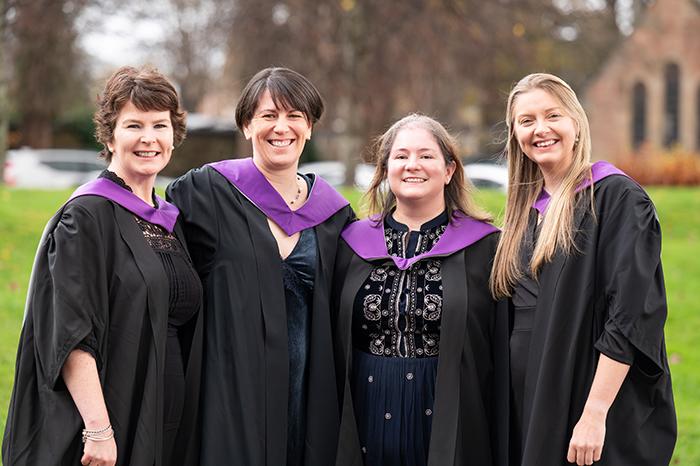
In 2025, UHI celebrated a major milestone as the first cohort of students graduated, marking a landmark moment for rural and remote healthcare education and one that advocates hope is the start of a growing specialist academic and clinical discipline.
What sets rural healthcare apart
For practitioners working in remote areas, decisions are shaped not just by clinical guidelines, but by geography, transport, weather, and the simple reality that help may be hours away.
As UHI’s Dr Heather Bain, Head of Academic Operations for Centre for Rural Health Sciences, explained, delivering in a rural environment can depend a lot on what practitioners have come to call “clinical courage”.
“When you're in a remote and rural area, if you're the only person and you've got to make a decision, you will perhaps make a decision that's not on a standard guideline.”
This could be because only certain medications are immediately available, because there is limited access to facilities or specialist staff, or, as one recent graduate explained, a follow-up visit could be hours away – time in which a medical situation can change drastically.
That reality forces clinicians to think differently — and further ahead — than many of their urban counterparts.
‘Clinical courage’ and professional confidence
The idea of ‘clinical courage’ — the confidence to make high-stakes decisions independently, and to defend those decisions when challenged – is an important part of how some practitioners described their regular responsibilities.
Jenna Gettings, who works with NHS Highland and oversees a team of rural practitioners, said that the job can be isolating at times.
“We are lone workers. Most of my staff will not see another healthcare professional while they are out and about. They have to make clinical decisions, they have to have autonomy, and sometimes they are making decisions without the luxury of mobile phone service, internet access, or running water.”
Weather presents its own challenges, she said.
“When we have the smallest amount of weather, we may get cut off by wind or snow, but we are still expected to go out and see a patient.”
As graduate Jamie Anderson, Advanced Rural Nurse Practitioner and General Practice Nurse, explained, the concept of courage extends to professional relationships.
“This has given me the confidence in myself as a practitioner to argue for my patients potentially. We know that the hospitals are pushed, and we are trying our best to keep people in the community where we can. But when you have, say, an hour and 45 minutes between our practice and pediatrics, I need to be able to say over the phone ‘I am an autonomous practitioner, and I am saying that my patient is not well.’”
Even though a patient with the same diagnosis in the city centre of Glasgow might be told to stay at home and keep an eye on symptoms, Ms Anderson said that an hour or two-hour drive to hospital means that rural practitioners do not have the freedom to wait and see how things develop.
Recognising skills already in practice
In interviews with graduates and representatives from the NHS and UHI, a recurring theme was that the new MSc is less about pushing innovation in service and more about entrenching lessons that rural practitioners have learned on the job and formalising the training.
Jane Lafferty sketched out what a typical week might look like from her base on Skye: a combination of surgery appointments, house visits and remote consultations. But as she walked through each one, it quickly became clear that her location requires a unique type of logistical thinking.
Boat trips need to be planned to account for weather and to allow time for return; equipment needs to be packed so that she and her colleagues can not only carry out the scheduled check-up but also save hours or days by conducting follow-ups on the spot.
As part of their studies, each graduate completed an ‘Innovation in Practice’ project focused on improving care within their own communities.
Dr Bain described these projects as ways to invest in communities and local clinical settings.
Examples of the projects include weight loss management, improving outcomes for patients with diabetes, introducing an urgent and emergency care handover tool on a remote island, and increasing nurse-led phone reviews across two island practices.
As NES’s Dr Pam Nicoll, Associate Director of Medicine, Interim Director of The National Centre for Remote and Rural Health and Care, said, none of this will be new to rural professionals.
“I was aware of these brilliant people who were doing a lot of this work, but it wasn't being credited to them.”
She called the development of the new MSc a ‘landmark moment’ for remote and rural healthcare.
"The partnership between NES’s National Centre for Remote and Rural Health and Care and UHI’s Centre for Rural Health Sciences has supported these advanced practitioners to develop additional rural specialist skills and knowledge to provide high‑quality, holistic person-centred care in remote, rural and island communities.
“This is vital work, helping to bridge the gap in health inequalities for and with communities, contributing to multidisciplinary team working, and supporting the sustainability of primary care services in rural Scotland.”
This article was originally publised by The Herald on Wednesday 28 January 2026