Secrets and Spies: The 2026 Jim Hunter Prize Winner
Each year, the Centre for History is delighted to award the Professor James Hunter Dissertation Prize to the best first class dissertation of the year. We would like to extend our congratulations to the 2026 winner, Hilary Robertson, who is graduating this autumn with a BA (Hons) in Scottish History, attending the ceremony at UHI Perth on 8 October.
We chatted to Hilary to find out more about her experience of studying at UHI Centre for History, her award-winning dissertation, ‘Secrets and Spies: Intelligence Gathering and Regency Government in Scotland, 1513-1578’ and plans for the future.
Why did you choose to study at UHI Centre for History?
From the outset, I wanted to study Scottish History, to better understand the people, events and circumstances that have shaped modern Scotland. I looked at courses offered by several universities and UHI stood out for two main reasons. Firstly, the modular structure of the course meant I could fit it round existing work commitments. Secondly, being able to combine history with modules from other Humanities programmes gave the course a really attractive breadth. That allowed me to learn Gaelic for a year and study how photography shaped ideas of cultural identity in Scotland.
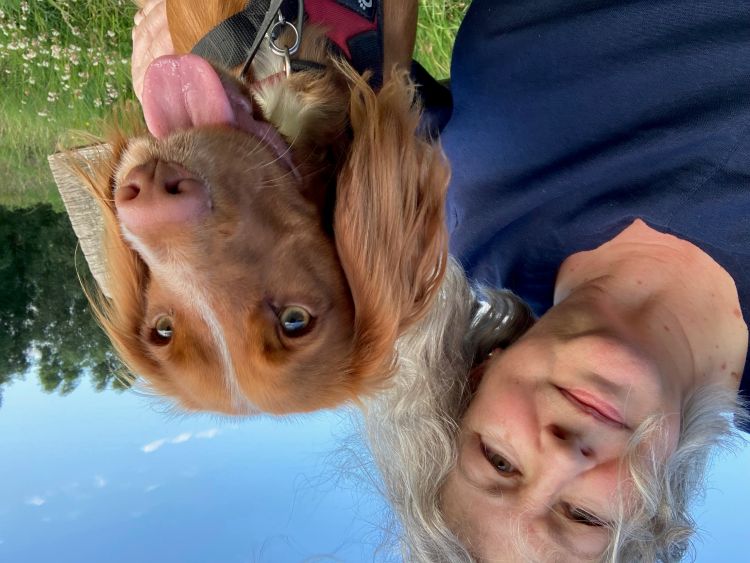 Hilary and her dog Pip (photo courtesy of Hilary Robertson)
What are some of your personal highlights about studying History at UHI?
It’s difficult to pick highlights when I thoroughly enjoyed all the modules I choose to take. The course’s flexibility was a definite highlight. It meant that within many of the modules I could focus on aspects of history I especially wanted to explore, such as Scottish print culture, scientific instruments or the impact of the Protestant Reformation. Added to that, the field trip to Culloden as part of the Jacobites: Patriots, Rebels or Opportunists module, and the good friends I’ve made along the way, were particular high points.
What are the most important skills you have developed during your degree?
Analytical skills, critical thinking and writing well have always been important to my career and studying history has really helped to hone these. I’ve learned to challenge my own assumptions more readily than I might have previously, and I’m very mindful of how important it is to consider carefully who said/wrote something and why. I also enjoyed learning about writing in an academic style and constructing a robust written argument. Academic writing is rather different from the journalistic style of writing I learned early in my career so the constructive feedback from lecturers, along with the Humanities Skills seminars on essay writing, were invaluable in developing the skill.
Can you tell us about your prize-winning dissertation?
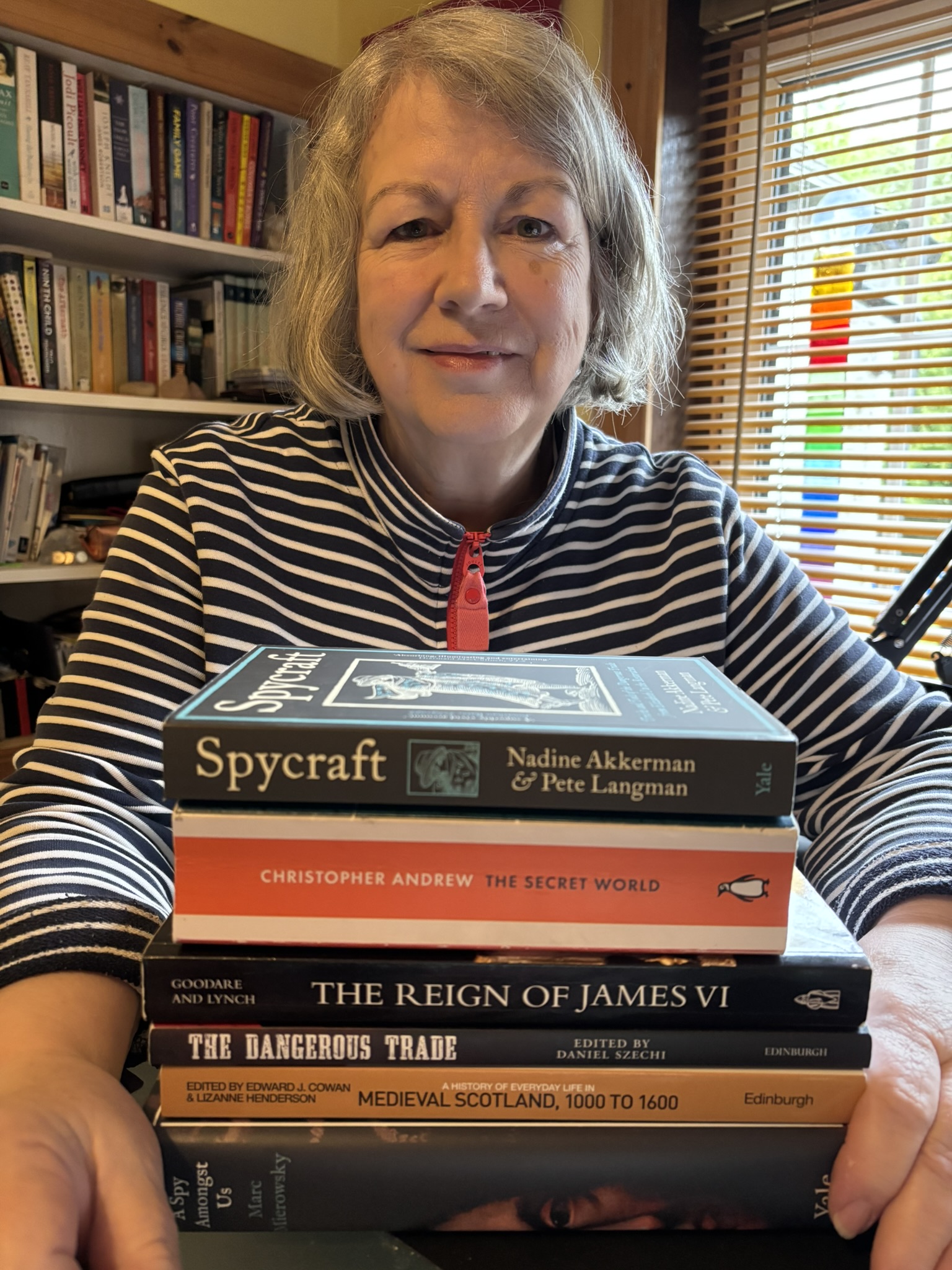
It was difficult to choose a dissertation topic because I was interested in so many different aspects of the history I had studied at the previous three levels. I knew I particularly enjoyed exploring the medieval and early modern periods and thinking about the availability of primary sources helped me narrow that down to the early modern period. The project I did as part of the Public History module got me thinking about espionage, spies and the use of intelligence so I began to explore that as the possible focus for my dissertation. Some initial research suggested this was not a topic much studied in relation to Scotland so, with the expert guidance of my supervisor Dr Lucy Dean, I settled on covert and overt intelligence gathering in sixteenth century Scotland. I focused on the three periods of regency in that century, broadly at the beginning, middle and towards the end of the period, so that I could consider changes over time.
Aspects of intelligence gathering in other parts of Europe have been well studied, so that much more is known, for example, about Venice and England. I really enjoyed looking at how Scotland compared and finding that, while developments took place later, similar trends were evident. I found it a challenging topic to research because the secretive nature of much intelligence gathering meant finding evidence in the sources could be difficult. Among my favourite findings was that one spy was to make himself known by offering his left thumb and the cuff of his shirt sleeve.
 (photo courtesy of Hilary Robertson)
"I came to Hilary’s work with a little bit of trepidation because of knowing little of the period it deals with and nothing at all of the topic it explores. I needn’t have worried. Hilary’s a first-rate guide and I come away with a whole set of new insights. What’s so impressive too - and evident even to someone like me who’s never engaged with the sources in question - is Hilary’s mastery of a mass of often abstruse information. I’m very pleased to offer Hilary my congratulations and good wishes." - Professor Emeritus, Jim Hunter
What did winning the James Hunter Dissertation Prize mean to you?
I was surprised and thrilled to learn my dissertation had been awarded the prize. I enjoyed doing the research and having it recognised as making a real contribution to this field of study was wonderful. I benefitted hugely from Dr Dean’s advice and guidance, and I had great support from my family, but completing the dissertation was still hard work. Winning the prize feels like a fantastic acknowledgment of all that went into it.
What are your future plans?
I am undecided but further study and research may well feature. The kind comments from the internal and external markers, and from Professor Hunter himself, have prompted me to think about a postgraduate research degree. Alongside that, I hope to develop some writing projects.